
Material & Build
Industrial-grade HDPE, precision engineering and modern manufacturing techniques combine to create a new generation of canal boat shells.
Why HDPE?
We use Röchling Polystone® G, a premium industrial-grade HDPE proven in demanding marine environments worldwide. Röchling, founded in 1822, brings nearly two centuries of engineering expertise, with materials used in Arctic workboats, ferries, rescue craft, aquaculture vessels, and industrial marine systems operating successfully since the 1980s.
HDPE delivers corrosion-free performance with no rust, no pitting, and no need for repainting cycles. It provides strong thermal stability, helping maintain more consistent internal temperatures and improving onboard comfort.
Its lightweight structure improves handling in locks, reduces energy demand, and enhances manoeuvrability. Unlike rigid materials, HDPE absorbs impact energy rather than transferring it, reducing damage to both the vessel and canal infrastructure.
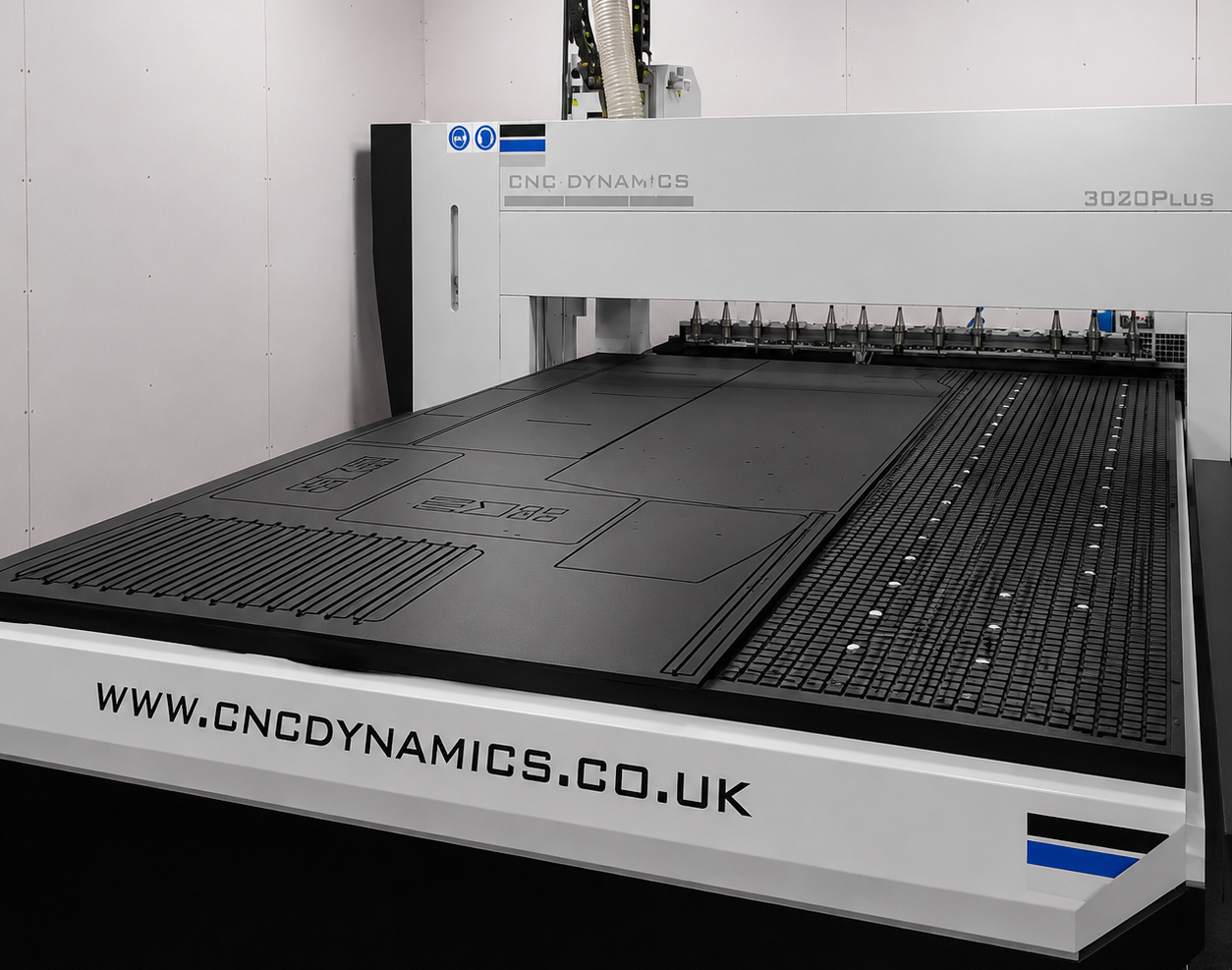
Properties of HDPE

Durable Construction

Corrosion Resistent

Impact Resistant

Low Maintenance

Lightweight

Rot Proof

UV Stable

Recyclable
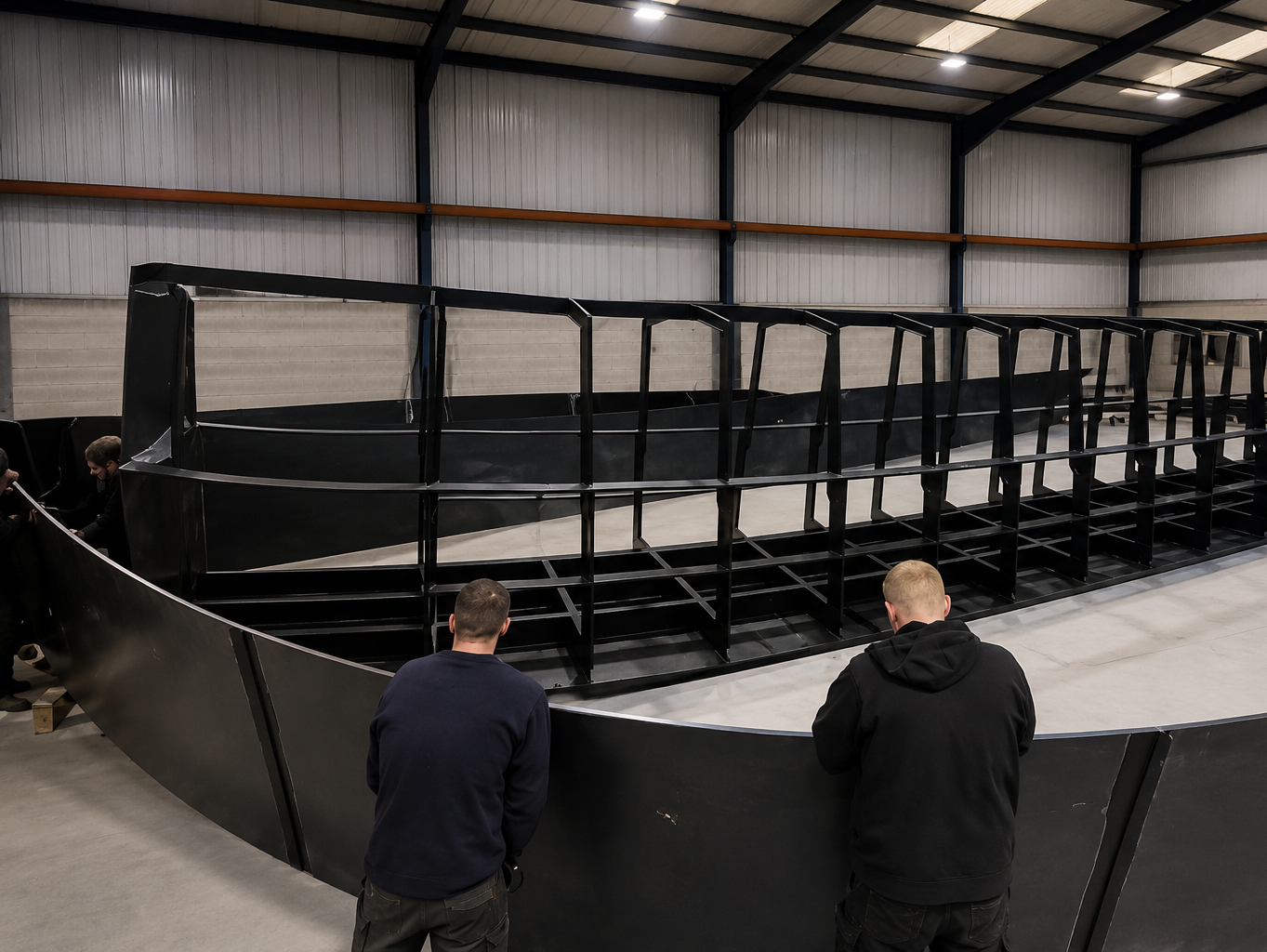
Engineered from the Inside Out
Each hull begins with a CNC-cut rib framework that forms the structural backbone of the vessel, with interlocking HDPE panels integrated into the framework and fully welded to create a continuous bonded hull.
The system is designed for controlled flexibility, impact absorption in locks, and long-term durability without corrosion or fatigue. Every hull incorporates reinforced base and floor structures, load-bearing ribs and stringers, and fully welded HDPE construction throughout, creating a strong, unified structure designed for predictable performance over decades of use.
We supply hull shells only, giving owners and fit-out specialists full freedom to create bespoke interiors. Each stage of production is verified through structural testing to ensure performance under real inland waterway conditions, with the focus on long-term reliability, low maintenance and practical durability.
Engineered from the Inside Out
Each hull begins with a CNC-cut rib framework that forms the structural backbone of the vessel, with interlocking HDPE panels integrated into the framework and fully welded to create a continuous bonded hull.
The system is designed for controlled flexibility, impact absorption in locks, and long-term durability without corrosion or fatigue. Every hull incorporates reinforced base and floor structures, load-bearing ribs and stringers, and fully welded HDPE construction throughout, creating a strong, unified structure designed for predictable performance over decades of use.
We supply hull shells only, giving owners and fit-out specialists full freedom to create bespoke interiors. Each stage of production is verified through structural testing to ensure performance under real inland waterway conditions, with the focus on long-term reliability, low maintenance and practical durability.
Evolution of Canal Boat Materials
The materials used in canal boat construction have evolved over time in response to the practical challenges of durability, maintenance and long-term performance on inland waterways.
Wood
Wood was the original material, chosen for its availability and ease of repair, but it suffered from rot, water ingress, and constant maintenance requirements.
Steel
Steel brought major improvements in strength and durability, but introduced corrosion, pitting, and ongoing maintenance cycles such as blacking and repainting.
GRP
GRP introduced a lighter, rust-free alternative, but can suffer from osmosis, structural ageing, and more complex repairs over time.
HDPE
HDPE represents the latest stage in this evolution. It is corrosion-free, highly impact-resistant, and designed for long-term durability with minimal maintenance.
Across every stage, the aim has been to improve durability, reduce maintenance and make canal boats more practical to own and operate. HDPE continues that progression by addressing many of the hidden lifetime costs associated with traditional boat-building materials.
Engineering the Future of Inland Waterways
FP Technologies are committed to advancing inland waterways through innovative materials, precision engineering and modern manufacturing techniques.
If you're planning a new canal boat, we’d welcome the opportunity to discuss your requirements and explain how HDPE construction differs from traditional materials. We can advise on hull design, construction methods and the long-term performance benefits of a modern, low-maintenance engineering solution.